
This is a historical blog post, some links included in this post may no longer be active or accurate.
Neighbors for More Neighbors stands up for secure, abundant homes for everyone in the Twin Cities. Despite its current legal troubles, Minneapolis 2040 legalized a bunch of new homes in Minneapolis, primarily through the implementation of its new built-form regulations. While it may take some time, Minneapolis 2040 and its land-use policies will eventually be reinstated and we need to continue looking forward here in Minneapolis.
The implementation of the plan so far has proved that we have a highly competent planning department (CPED) in Minneapolis capable of making complex changes to outdated concepts that have been around for decades (they've proved it so far). With that in mind, I'm going to focus on exactly one such concept that remains unaddressed today; a regulation metric known as Floor Area Ratio (FAR).
Eliminate Floor Area Ratios
There are two main reasons to eliminate Floor Area Ratios (FAR) from zoning code:
Simplicity- FAR is a complicated metric. It makes our zoning code less accessible.
Redundancy - FAR restricts building size for no unique reason; it's redundant and supplementary at best.
What is a Floor Area Ratio?
Floor Area Ratios (FAR) are a metric used to measure how large a building on a lot is relative to the lot's size. For example, if a 10,000 sqft lot allows a FAR of 0.8, you could build an 8,000 sqft building. The diagrams from Minneapolis 2040 below detail three different ways of achieving a FAR of 1.0.
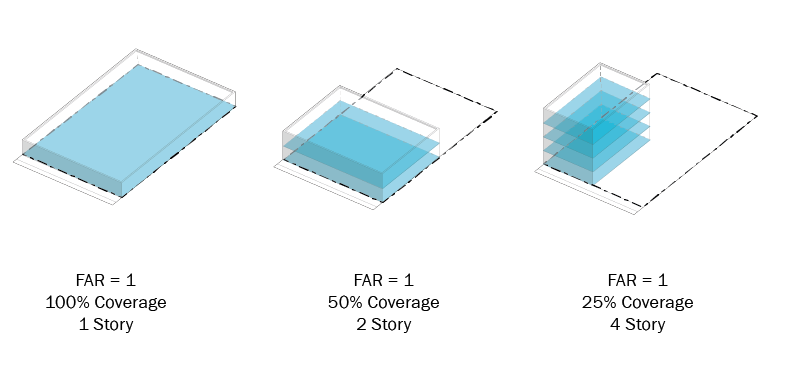
Floor Area Ratio Demonstration - From Minneapolis 2040 Website
Hopefully you didn't spend too long looking at that diagram trying to understand what FAR is. If you did, you're in good company - and hopefully you're now on-board with my claim that it's a complicated metric.
Why FAR Maximums are a Redundant Regulation
FAR maximums are a redundant regulation when used in conjunction with height limits and lot coverage limits for buildings. This is because it further limits the size of a building for no apparent reason. In fact - here’s some of what the Planning Advisory Service (a predecessor, and current part of the American Planning Association, or APA) had to say about it in 1958:
In one- and two-family zones, the use of the floor area ratio seems to be rather limited. Without going into the well established justifications for yard requirements, we can see that along with maximum height limits they establish a volume control. If to these dimensions is added maximum lot coverage, we get a result that has the same effect as a floor area ratio in that, when combined, they establish a constant ratio between volume of buildings and area of land.
The publication even states that the main advantage of FAR is that it adds flexibility over other bulk controls. Of course, this assumes that you don’t necessarily have those other bulk controls in addition to FAR - otherwise, what flexibility would it add?
Other restrictions in our built form regulations have clear, defensible purposes:
Lot coverage (and/or impervious surface) maximums preserve green space and provide permeable surfaces for stormwater and snowmelt.
Height maximums prevent tall buildings that would otherwise shadow their neighbors or alter wind patterns. Historically, these restrictions also existed for fire safety reasons.
Setback minimums (required yards) prevent property owners from building too close to the edge of their own property, or building too close to city sidewalks.
While some (me) may argue about the validity of a few of these purposes in the state’s largest city during a housing crisis, the purpose is at least clear. There's nothing that FAR maximums accomplish that can’t be or aren't already accomplished by some other regulation in our zoning code. In the context of home-building, FAR maximums prevent valuable livable space for people. I can prove it too, with a visual exercise.
A Redundant Metric - Visualized
Let’s look at a typical 5,000 sqft lot in Minneapolis which falls in Built Form Overlay District - Interior 2. Below are the Interior 2 regulations:
Minimum Front Setback: 20 ft
Minimum Side / Rear Setback: 5 ft
Maximum Lot Coverage: 45%
Building Height Maximum: 2.5 stories
FAR Maximum: 0.5
I’ve shown the lot (green), the buildable region (blue), and the maximum lot coverage (yellow) in the three figures below.
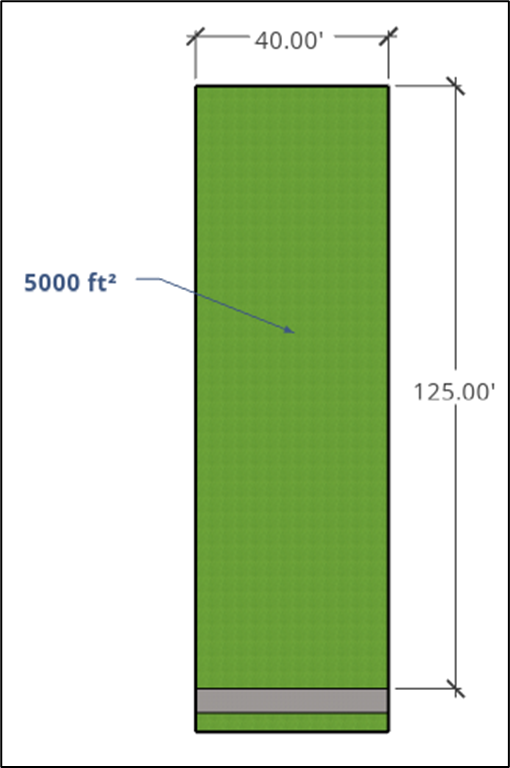
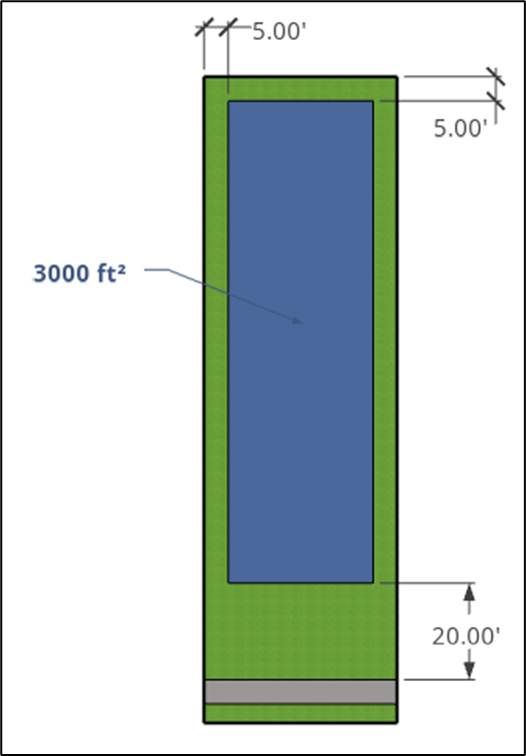
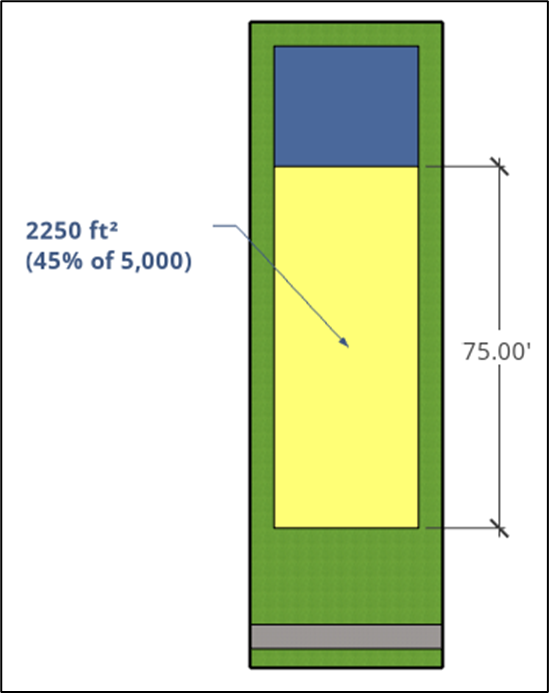
After applying setbacks and lot coverage restrictions, we have 45% of the property (2,250 sqft) of space to build on. Interior 2 districts allow us to build 2.5 stories here. If we choose to do this, we have a maximum floor area of 6,750 sqft to work with. Let's draft a triplex of this size, since Minneapolis legalized triplexes four years ago.
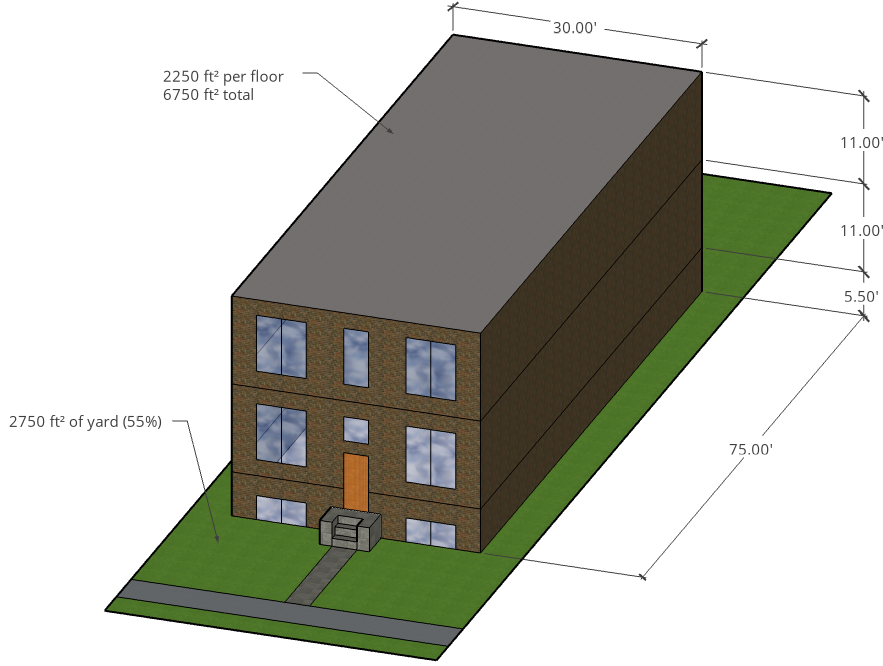
Allowed building before a FAR maximum is applied to 5,000 sqft Interior 2 lot (meets setback, maximum height, and maximum lot coverage requirements)
Great! This building doesn't seem like it'd be out of place in the state's largest city.It's not too tall, and there's still plenty of room for green space (more than half of the property is uncovered). Three 2,250 sqft units in a triplex is quite large, and these could easily be four or five-bedroom (family sized) units. I've included some pictures towards the end of this post of existing homes in Interior 2 districts that don't look too dissimilar from this one (aside from looking much better than my box-shaped representations).
Now let's introduce Floor Area Ratio maximumsinto our design process. The Interior 2 FAR limit is 0.5 (for 1-3 unit dwellings, which is all we're allowed to build here). Our building's allowed gross floor area is now 2,500 sqft (0.5 FAR * 5,000 sqft). Distributing that area equally across our three distinct floors, that’s 833 sqft per floor. This sounds like a pretty big decrease (63%, to be exact) compared to the previous 2,250, but let's draft it up and see how our new FAR-regulated triplex looks.
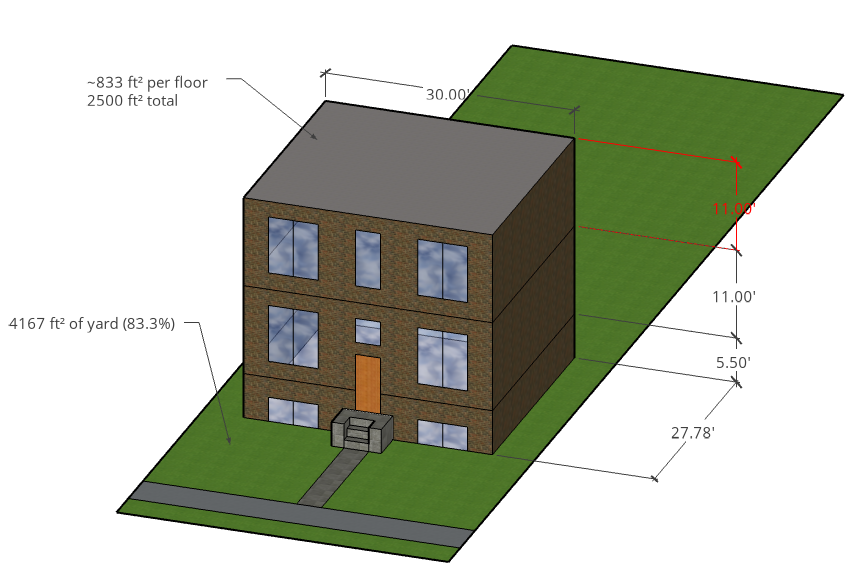
Allowed building after a FAR maximum of 0.5 is applied to a 5,000 sqft Interior 2 lot.
That's obviously a lot less space for people to live. After including stairs, entries, and possible mechanical rooms, each unit in this triplex is going to be pretty cramped, and likely a 1-bedroom at best. But the question I'd like to ask is what exactly did the FAR maximum achieve? In this case, FAR maximums made it so our triplex took up much less of the lot, but that's what the lot coverage maximums are for! It sure seems like FAR is redundant here, and just restricting building size for no obvious reason.
Now that I've (hopefully) got your blood boiling; I need to play devil's advocate. We've got one more trick up our sleeve for getting a decent-sized triplex built (and yes, it's actually possible). We can sink the lower level so that less than 50% of its wall area is above grade. Now - according to the FAR calculation rules - the lower-level floor area doesn't count towards the FAR calculation. In this case, we can now spread the 2,500 sqft across the two upper floors, for 1,250 sqft per floor. I like to call this maneuver the lower-level loophole.
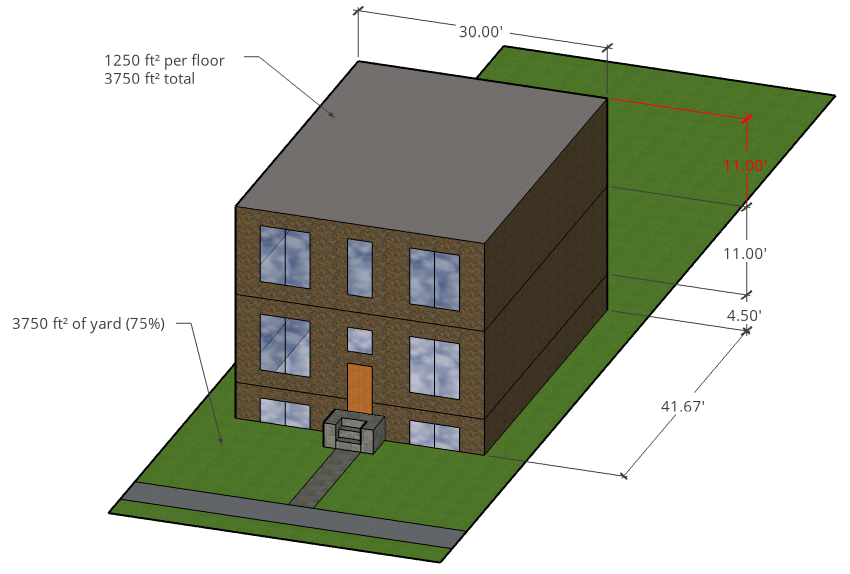
Allowed building after a FAR maximum of 0.5 and the lower-level loophole is applied to a 5,000 sqft Interior 2 lot.
As you can see, even in this case, where we've tried to gerrymander our way out of FAR regulations by utilizing the lower-level loophole, we can't reach the maximum lot coverage (we're only at 35%!) and we're no longer utilizing the maximum height of 2.5 stories.
In almost every case where we attempt to maximize FAR, we will almost always be unable to reach the limits of other built form regulations (lot coverage, height) which actually have a purpose. This is why FAR maximums are redundant. They are designed to simply make buildings smaller. FAR maximums inhibit efficient land use and actively work against (and diminish the value of) other built form regulations that are much easier to understand and defend.
Existing Examples
The Minneapolis 2040 plan legalized triplexes on any residential lot in the city, but it did not necessarily increase the size of the building you're allowed to build on those lots. In fact, the current FAR regulations would actually prohibit many existing buildings throughout the city. Below are examples of buildings that would not comply with current FAR regulations. These can be found all over the city.
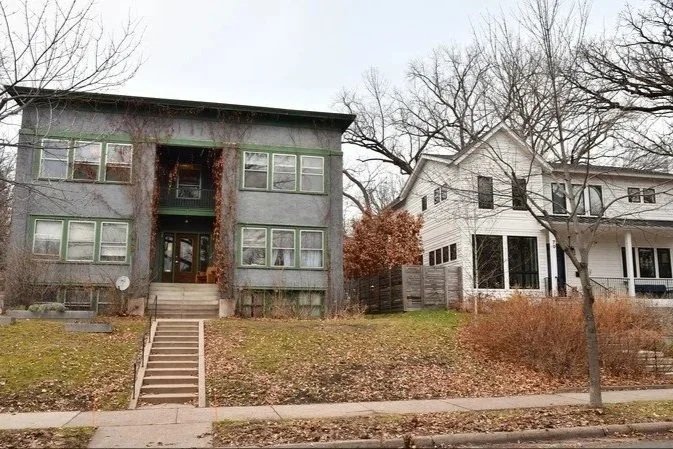
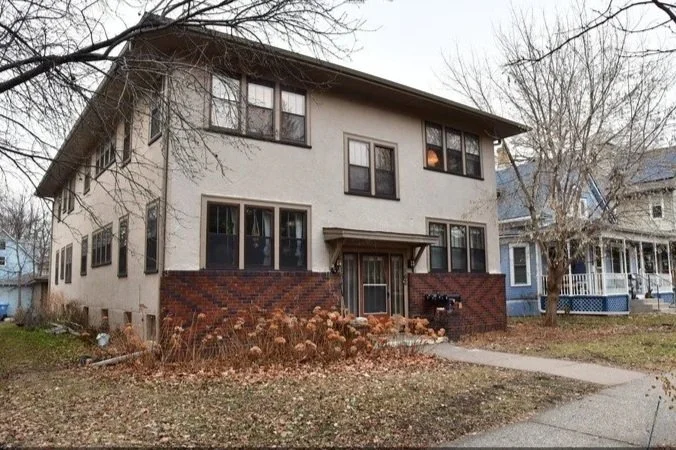
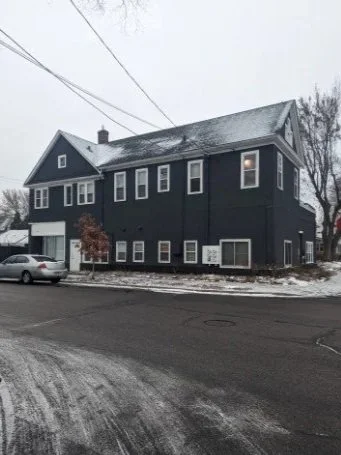
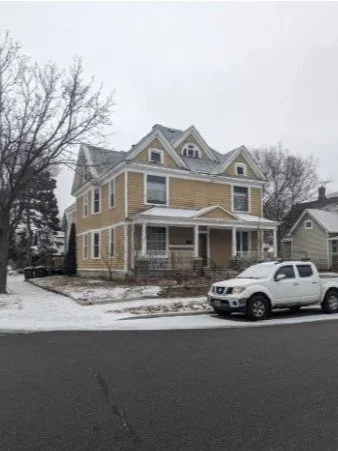
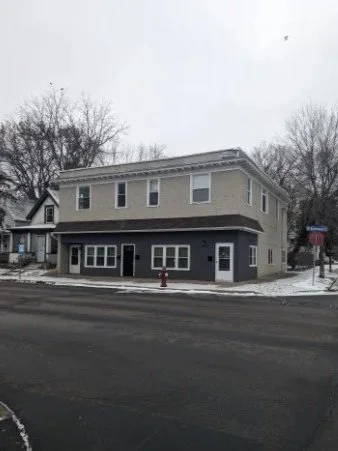
Many of the examples above don't look particularly out of place in Minneapolis, but you would be unable to build them today due to FAR regulations. This further makes the case that limiting FAR does not have an impact on whether or not a building fits in with its neighbors. We really only need setback minimums, lot coverage maximums, and height maximums to regulate built-form. I'd also note that none of these would be allowed to be 4-plexes or 5-plexes on their current lot size (but that's a different issue I hope to cover soon).
Addressing Exceptions to the Rule
Let’s address some counterpoints to eliminating FAR from zoning code. There are two specific places that FAR actually does have a valid purpose - but these purposes can be addressed in other ways.
FAR maximums can prevent excessively large single-family homes (McMansions).
FAR minimums can prevent the underutilization of high value property.
First up, McMansions. In 2007, Minneapolis implemented a FAR of 0.5 in its then-single-family districts in an effort to prevent massive single-family homes. That’s right, the specific regulation I’m irritated about comes from 2007 - before then, there were no FAR limits in our single-family zones (which were recently converted to 3-family zones).
Removing FAR limits would allow a 6,750 sqft single family home on the previously mentioned 5,000 sqft lot. Since that ordinance passed in 2007, Minneapolis has legalized up-to triplexes on the lots in question. This doesn’t mean that all massive single-family homes will be prevented, but that developers now have an alternative when developing these parcels. There’s also an argument to be made for keeping wealthy families (and their tax dollars) in Minneapolis instead of the suburbs. This is simply not a hill worth dying on for anyone that is pro-homes, and a much better way to prevent these might be to allow height bonuses or lot coverage bonuses for multifamily homes.
FAR minimums can also be useful for preventing small buildings on high-value land (near great transit, or downtown for example). Minneapolis currently uses these in several built-form districts, such as the one here. FAR minimums are redundant. Most districts in the city which currently have FAR minimums also have building height minimums which achieve nearly the same goal. Another approach to prevent under-utilization of high-value land is to implement Land Value Taxes (though this needs to be legalized at the state level first).
Hi! I'm Zachary Wajda (he/him), I'm a volunteer, advocate and board member for Neighbors for More Neighbors, and I live in Northeast Minneapolis. My opinions and thoughts above do not necessarily reflect the opinions of everyone in N4MN, and removing FAR is simply one way to legalize more homes in a city. If you somehow made it through all of this you must care about zoning code (or my opinions) more than the average person, and I'd love to hear your thoughts. Please feel free to email me at wajdazachary@gmail.com. The figures seen throughout this post were created by me (Zachary Wajda) using SketchUp. I'm an engineer, not an architect - so I make no apologies for my lack of creativity. Feel free to contact me or N4MN if you'd like to use these figures or photos to abolish FAR in a city near you.