2026 Legislative Session Recap
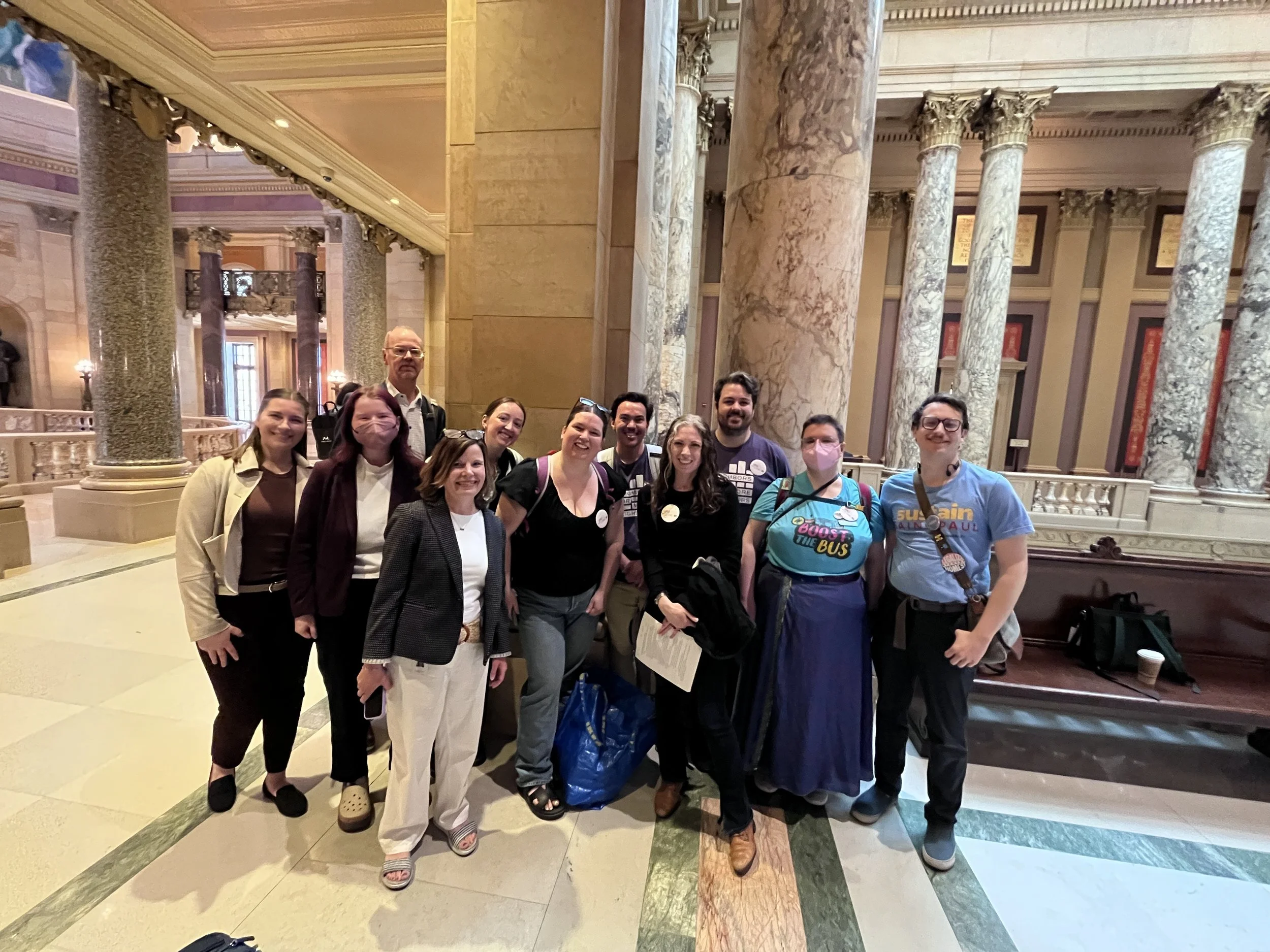
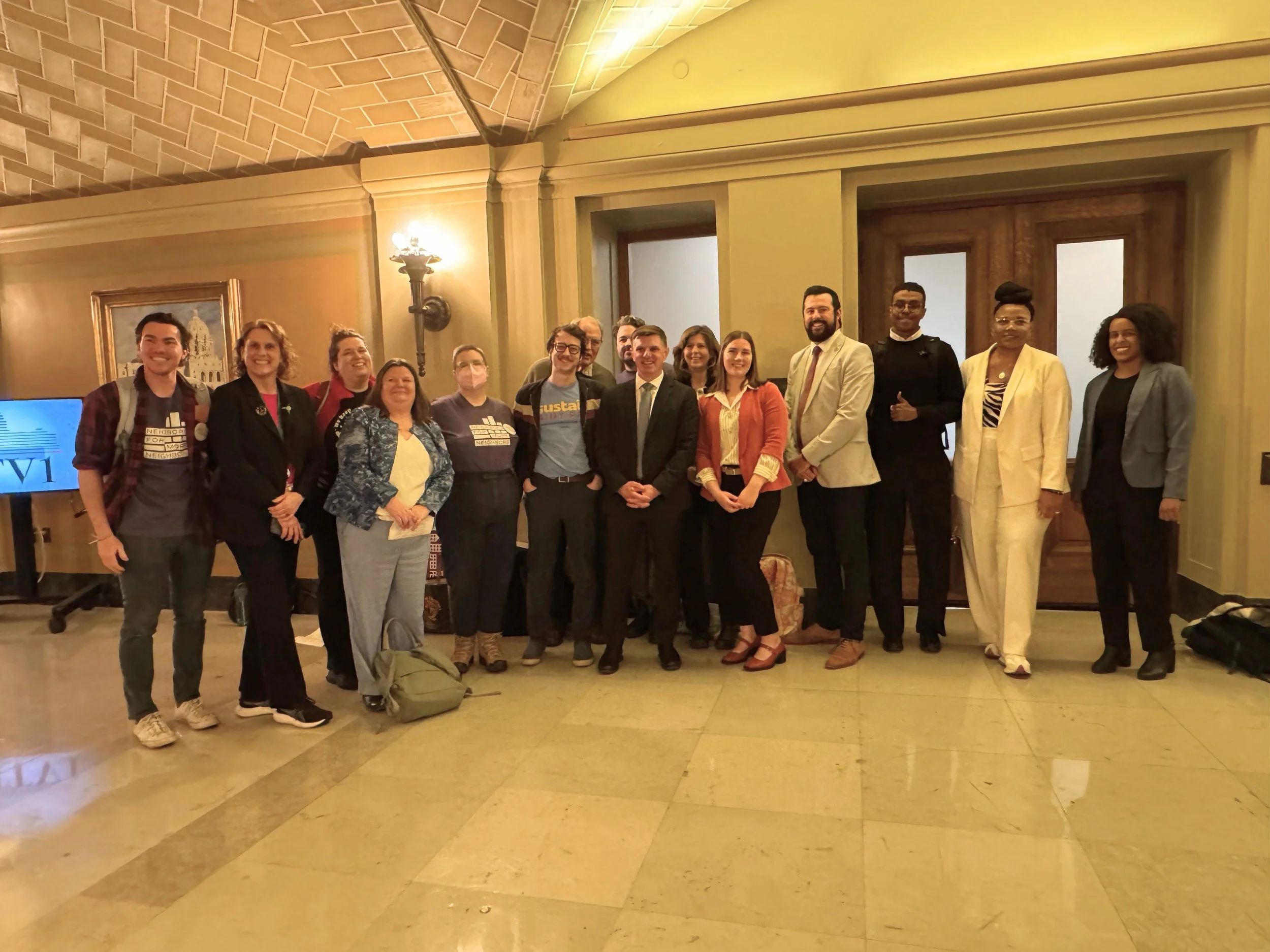
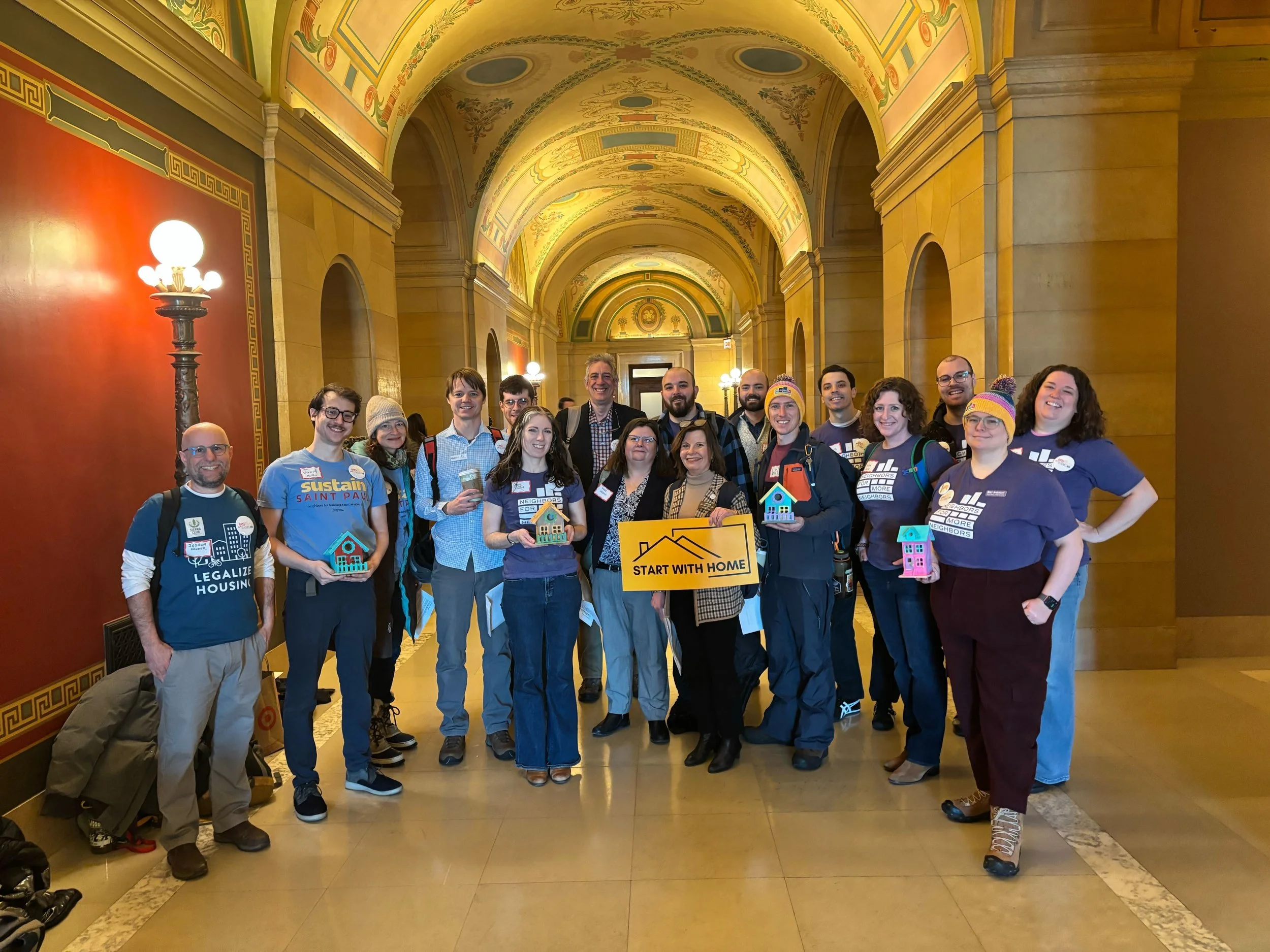
During the 2026 state legislative session, Neighbors for More Neighbors and our allies in the Yes to Homes coalition continued our push to pass legislation that would make it easier to build more types of homes in more places across our state. While we fell short in our goal of passing comprehensive pro-homes reforms, we did achieve some smaller wins and built significant momentum to continue our push next year. Read on for a summary of the work we did this legislative session.
Minnesota Starter Homes Act
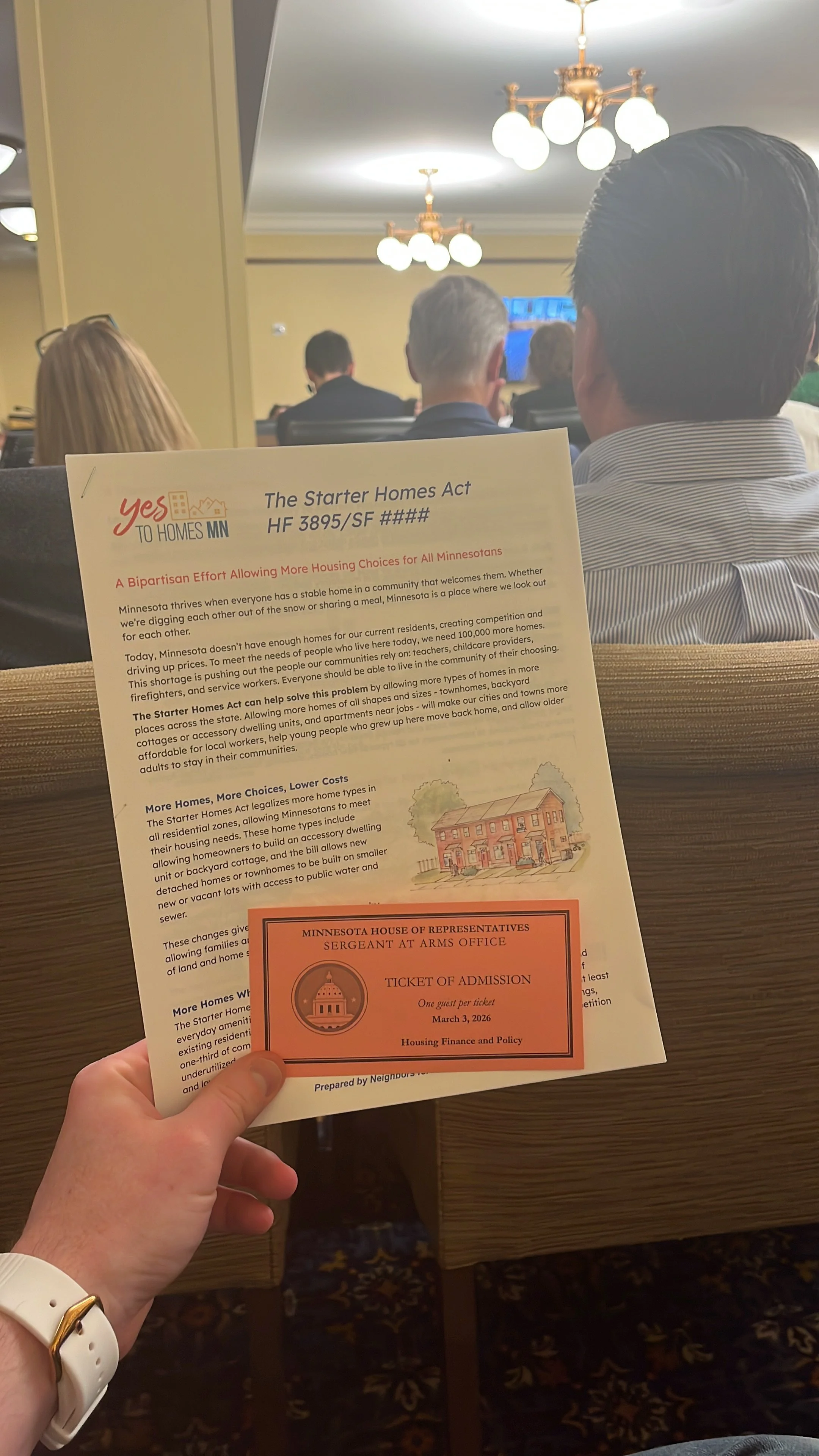
The Yes to Homes Coalition’s primary legislative priority this session was the Minnesota Starter Homes Act. This bill would require local governments to allow more types of homes, such as accessory dwelling units, duplexes, and townhomes, in at least some parts of all residential districts, and to allow more apartments in business districts. All cities would have the same requirements, but could choose where to allow those new homes as long as they are close to schools, parks, and other amenities. The bill also provides guardrails to ensure homes are buildable and prohibits some aesthetic mandates cities use that can drive up construction costs. The bill provides cities with a menu of 11 options to increase housing production, including eliminating parking minimums and subsidizing development. Cities would be required to implement a set number of these menu options depending on the size of their community.
The Minnesota Starter Homes Act had strong supporters from both parties. Legislative Champions included the Housing Committee chairs in both the Minnesota House and Senate, who made this bill a strong priority. We would like to thank Representatives Howard, Igo, Kraft, Jones, Rehrauher, Kozlowski, and Nash, and Senators Port, Rasmusson, Fateh, and Boldon for their support this year.
"There's no one magic bill that's going to answer or resolve the affordability crisis we're in housing. But one part of the answer is addressing housing supply in a systemic fashion, and that's what this bill does. It's about making it easier, faster, and more predictable and cheaper to build more types of housing in places that are closer to places that people work, go to school and play." - Rep. Larry Kraft (March 3rd 2026)
Speaker of the House, Rep. Lisa Demuth, and Gov. Walz expressed support for the legislation at various points during the session. The League of Minnesota Cities, which in previous sessions had strongly opposed similar bills, came out as neutral on the bill after extensive negotiations and discussions. One of our legislative champions, Rep. Spencer Igo, emphasized the bipartisan nature of housing and pointed out that “it is not a red or blue issue.”
Despite the hard work of our coalition and legislative champions, the Starter Homes Act did not become law this year. Some suburban Democrats and many Republican lawmakers chose to listen to city organizations like the Coalition of Greater Minnesota Cities and the newly formed Lake Minnetonka Area Legislative Coalition. These cities have continued to oppose weakening local control. And these members are choosing local control over regional solutions to our state’s housing shortage.
In the House, a successful informational hearing in the Housing Finance and Policy Committee showcased the significant progress we’ve made over the last year. However, the bill failed to pass out of the Elections Finance and Government Operations Committee on a five to seven vote. The bill did not receive a hearing in a Senate committee this year. The Yes to Homes Coalition generated 70 pieces of written testimony and over 20 in-person testifiers in support of the Starter Homes Act for House committee hearings this year. Neighbors for More Neighbors volunteer Connor Carroll testified that “the Starter Homes Act would allow families to live closer to one another and maintain strong bonds".
Right to Renew
This legislative session, Neighbors for More Neighbors supported legislation to protect tenants' rights to renew their leases. The legislative proposal was previously referred to as “Just Cause Eviction Protections.” This year, our coalition switched the framing to "Right to Renew." While the bill did not pass this year, we were able to grow our support and bring the idea to more lawmakers. In the Senate, the bill had a successful hearing in the Housing and Homelessness Prevention Committee on April 9th, gaining bipartisan support. We look forward to continuing to advocate for this important legislation next year.
Response to Operation Metro Surge
Operation Metro Surge defined the first part of the year in the Twin Cities. The fear and uncertainty that rippled through our community had many impacts, including a significant economic effect that contributed to housing instability for many of our neighbors, especially in the immigrant community. Neighbors for More Neighbors, along with many of our allies, stepped up to advocate for policies that ensure housing stability for our neighbors impacted by Operation Metro Surge.
In Minneapolis and St. Paul, we advocated for support for a statewide eviction moratorium and additional funding for rent assistance. In collaboration with coalition partners, our supporters sent over 5,000 letters to lawmakers and decision-makers in support of housing protections. This support contributed to more local funding for rent assistance and St. Paul extending its pre-eviction notice period to 60 days. At the state level, $40 million in rental assistance was included in the final housing omnibus package. While we know these actions are nowhere near enough to undo the harms caused by Operation Metro Surge, they will help some of our neighbors maintain a place to call home.
Strengthening Coalition and Gaining Momentum
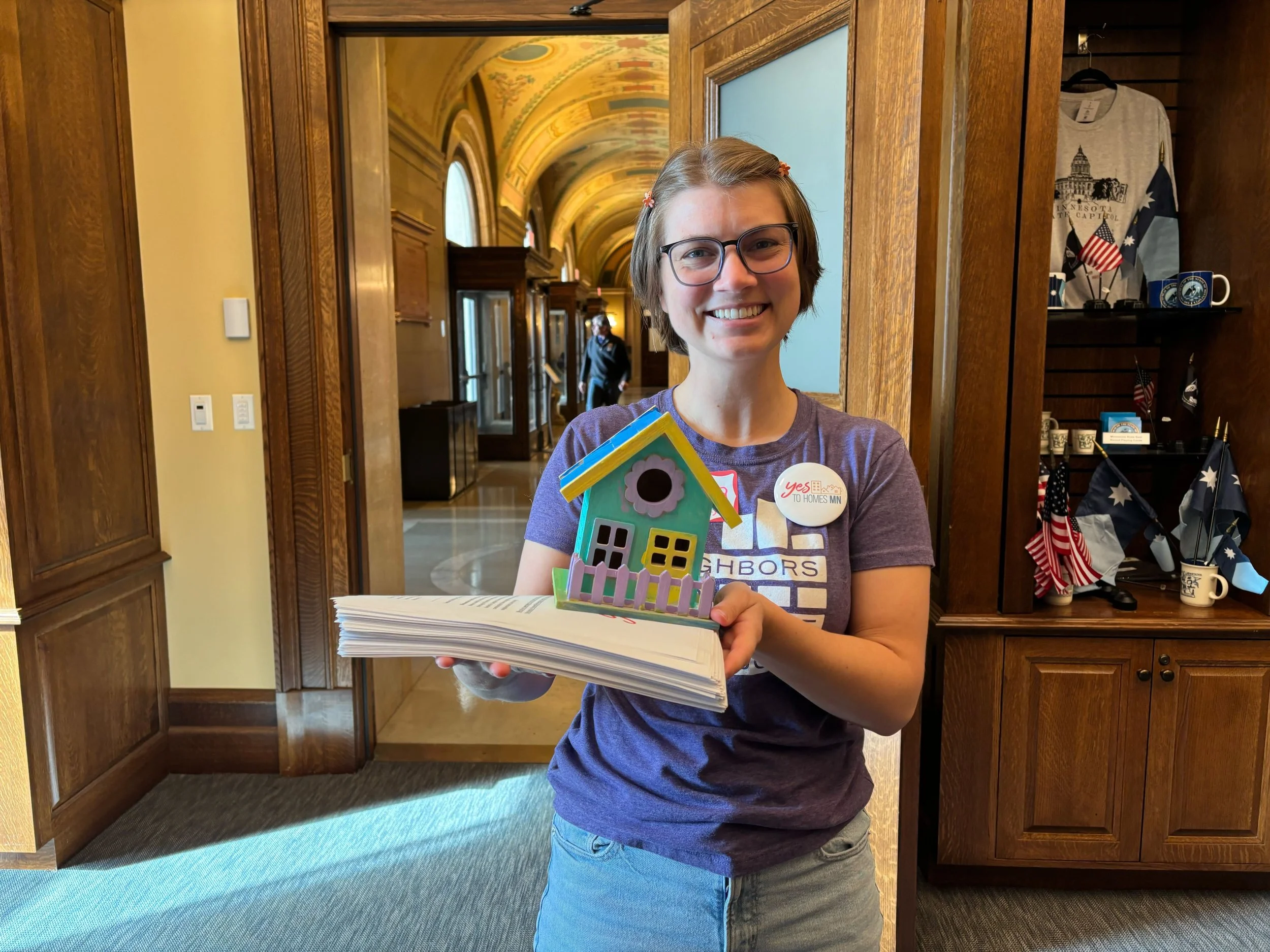
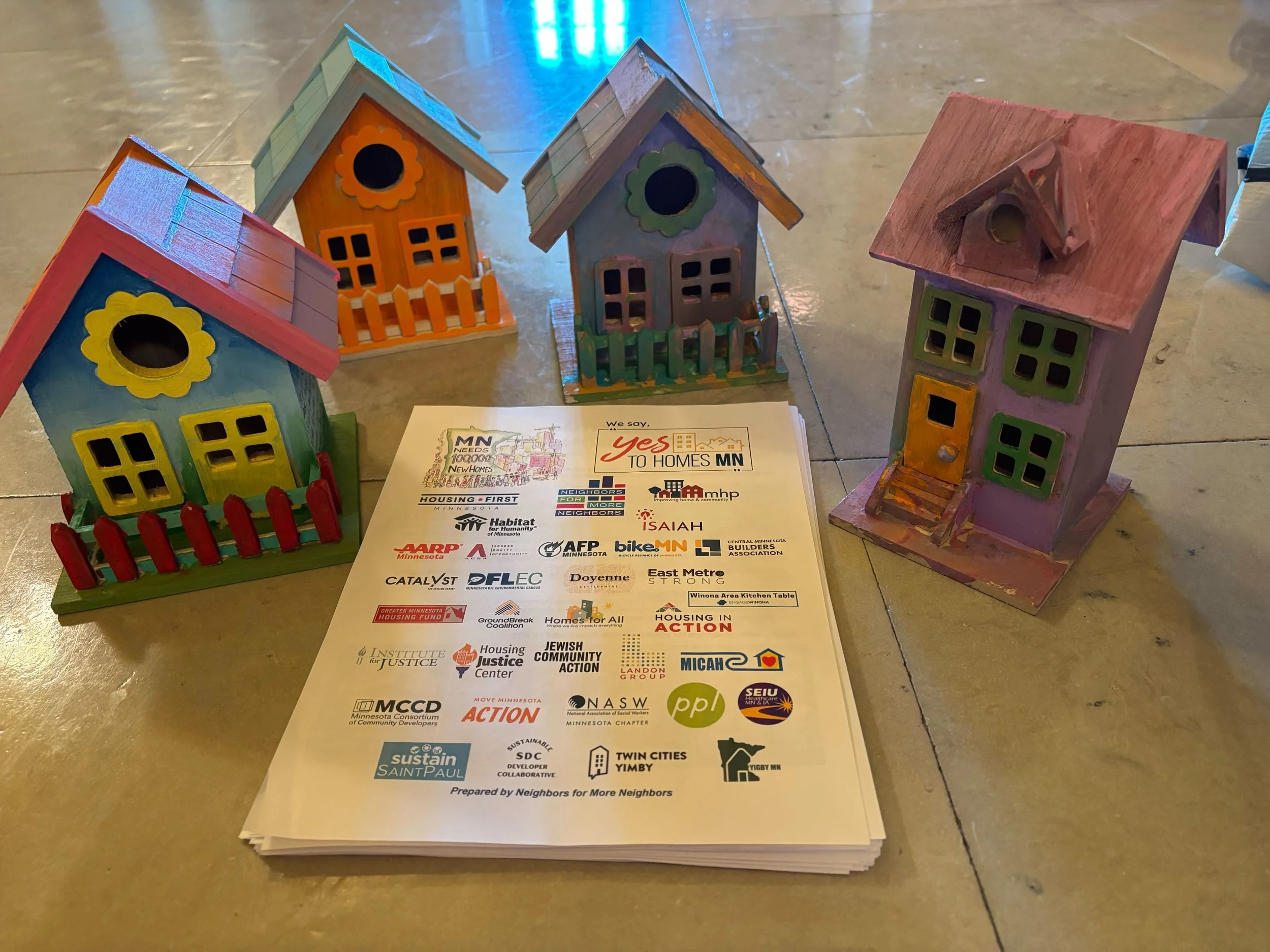
During the legislative session, the Yes to Homes Coalition showed its strength and displayed that Minnesotans want access to abundant and affordable housing. The Yes to Homes Coalition added new members this year and grew by 25%, reaching 41 organizational members. The coalition was able to meet with dozens of lawmakers and gathered more than 2,400 petition signatures, which were delivered to lawmakers. Our work on the Right to Renew legislation also allowed us to strengthen relationships with new partners, including Equity in Place.
The coalition also implemented a successful media strategy. During the first half of 2026, the coalition helped generate 53 news articles, opinion pieces, and editorial commentary highlighting the need for reform in Minnesota. Large media outlets are now paying close attention to this issue and giving it the coverage it deserves. The narrative around housing and local control is clearly shifting in our state.
Legislative Wins
While the MN Starter Homes Act did not pass, there were some successes at the Capitol. Lawmakers passed reforms targeting Homeowner Associations (HOAs), including a provision of the Starter Homes Act that prohibits cities from requiring HOAs for new development. The legislature also approved $100 million in housing bonds, which allow for renovations and new development of affordable housing. Additionally, the housing omnibus bill included $40 million in housing assistance and $4 million for supportive housing programs that support the most vulnerable Minnesotans. While we know these actions are not enough to address housing needs in our state, they demonstrate that action on this issue is possible and that there is bipartisan support for more housing.
Celebrate with Us
Join us on June 15 for our end-of-session celebration. We will have food, drinks, and space to connect! Please RSVP here.
Going Forward
In the months ahead, Neighbors for More Neighbors and our partners in the Yes to Homes coalition will be working hard to strengthen our networks and build support ahead of the 2027 legislative session. We will continue to support our housing justice partners in moving forward Right to Renew and Source of Income Protections. We will be looking to build out networks of supporters in the suburbs and across Greater Minnesota. In June, we will be taking time to reflect on this past year’s session and celebrate our work. In July, we will be taking time to plan for the next 3 years, and in August, we will be starting up the State Policy Task Force for 2027. In addition, we will be working on our listening tour to more deeply connect with communities across the state. If you are interested in being a part of this work, reach out to Angela Bonfiglio at angela@moreneighbors.org or fill out our volunteer form here.
This recap was written collaboratively by the Neighbors for More Neighbors State Policy Task Force. Special thanks to Sam Benson and Brit Anbacht for their contributions.