
Housing Affordability in Minnesota: Problem Scope and How We Can Address It
The Problem
Hundreds of thousands of Minnesotans struggle to afford housing. According to Minnesota Housing Partnership (MHP)’s recently published 2026 state profile, nearly half of Minnesota renters are cost-burdened (spending over 30% of their income on rent), 23% are severely cost-burdened (spending over 50%). Additionally, nearly two-thirds of senior renters are cost-burdened. Spending so much of your income on housing costs means there often isn’t enough money left over for food or medicine, and puts you at higher risk of losing your home.
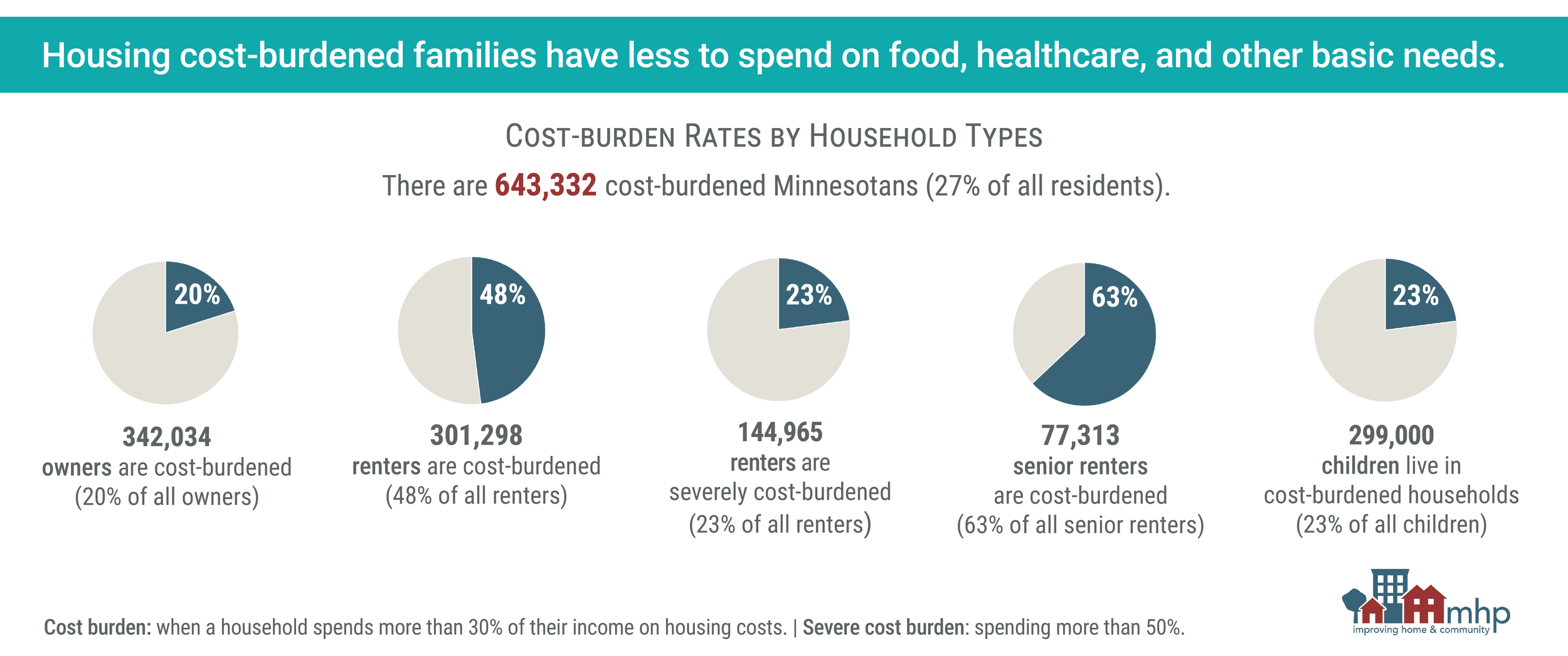
Charts showing cost-burden rates by household types. Source: MHP 2026 Minnesota State Housing Profile
MHP’s housing profile identified several other concerning findings, including that home values in the state are rising faster than income and that there is a large gap in the number of homes affordable to low-income Minnesotans. The profile states there is a shortage of 100,000 affordable homes for low-income renters in the state. This gap forces many renters in the state to pay more for rent than they can realistically afford, leaving them cost-burdened.
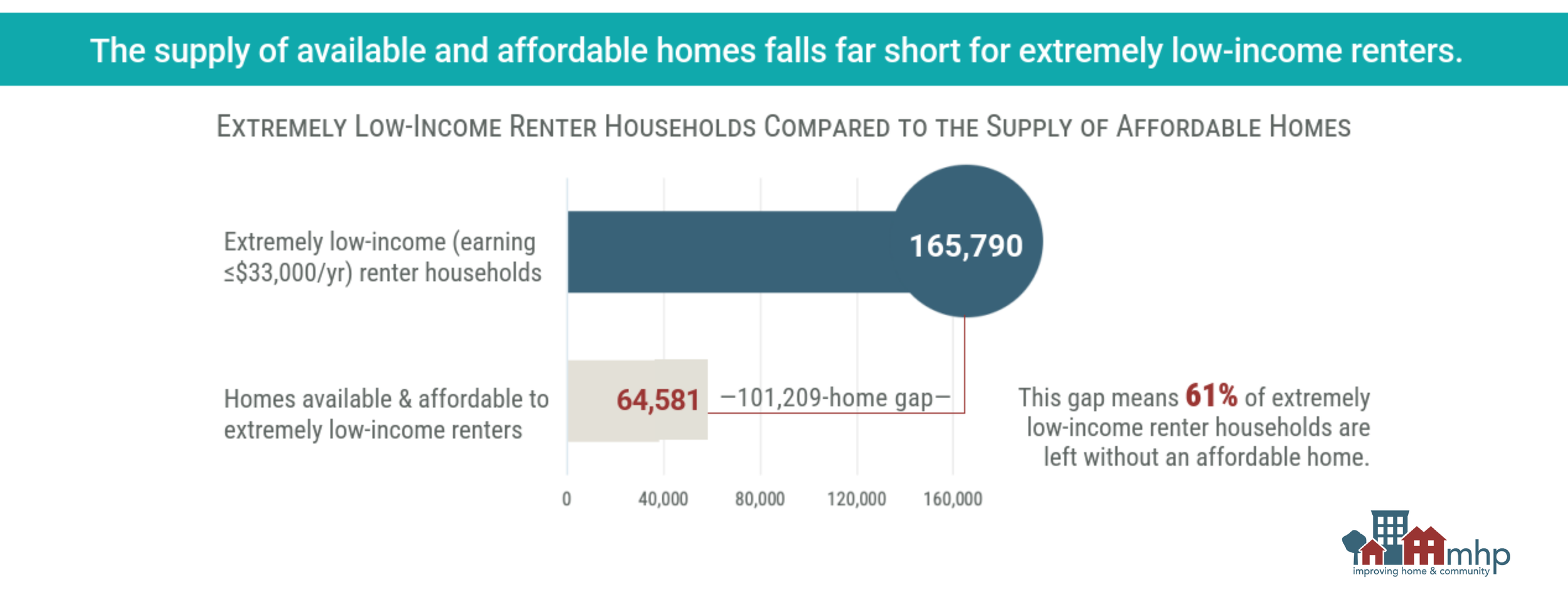
Chart showing extremely low-income renter households compared to the supply of affordable homes. Source: MHP 2026 Minnesota State Housing Profile
How Minnesota Can Create More Affordable Homes
Across Minnesota, restrictive rules and regulations are preventing the construction of much-needed homes, driving up the cost of homes available for rent or purchase. Other states and communities that have allowed more homes show a way forward.
Per recent Pew research, "Building more housing, both throughout a metropolitan area and in a particular neighborhood, keeps rent growth lower overall, but it takes the most pressure off of older, less-expensive housing."
In the late 2010s and early this decade, the city of Minneapolis relaxed and modified numerous zoning regulations and eliminated parking minimums to make it easier to build multifamily housing across the city. As the chart below demonstrates, these efforts have contributed to more housing being built, while growth in average rent has been below the national average.
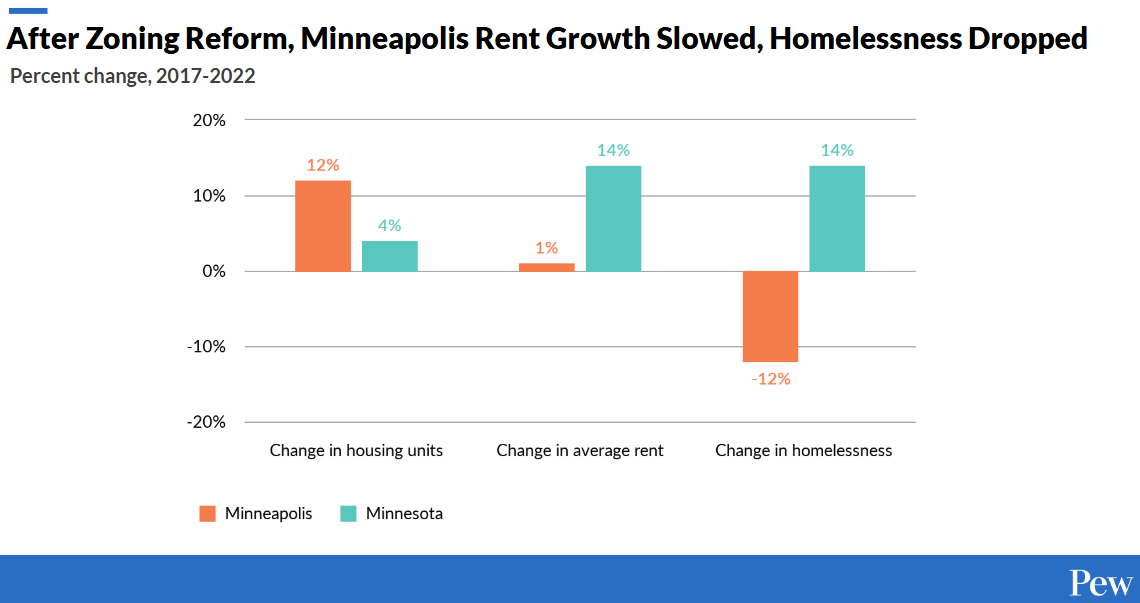
Chart showing Minneapolis’ Rent Growth Was Much Lower than Minnesota’s from 2017 to 2022. Source: PEW Charitable Trust
In Portland, Oregon, pro-housing zoning changes have made it easier to build smaller homes in more places and made home ownership more realistic for more people. In 2021, the Portland city council passed code changes to make it easier to build accessory dwelling units, duplexes, triplexes, fourplexes, and other forms of small homes in areas across the city. These types of homes are often referred to as “missing middle housing” since they straddle the gap between single-family homes and larger apartment or condo complexes.
Since the missing middle housing reforms were implemented in Portland, the city has build more than 1,400 of these types of homes. Compared to single-family houses, these smaller units are, on average, more affordable per unit, selling for hundreds of thousands of dollars less than comparable single-detached homes, and offer a path to homeownership for those who previously could not afford to own.
Statewide pro-homes and zoning reform legislation, like the bills that Neighbors for More Neighbors and the Yes to Homes Coalition are supporting, would allow more affordable housing to be built across the state. This could reduce the shortage of homes available to low-income renters and make homeownership a realistic possibility for more Minnesotans.