
Zoning Matters: Missing Middle Housing in Minneapolis
This is a historical blog post, some links included in this post may no longer be active or accurate.
Zoning code is one of the most important things in a city, determining which kinds of buildings can be made throughout the entire city. This is particularly important when analyzing a major metropolitan area with high demand for housing, such as Minneapolis. Due to the current land use rezoning study, there is no better time than the present to understand why.
What is Missing Middle Housing?
In much of the US, when people think of housing, they likely think of two types:
Detached single-family homes
High-density apartment/condo complexes
Missing middle housing is the happy medium. It is a broad category which includes many different kinds of homes for many different kinds of people. These are typically low-rise buildings, at about 2-3 stories in height:
Duplexes (Stacked or Side-by-side)
Courtyard Buildings (My personal favorite!)
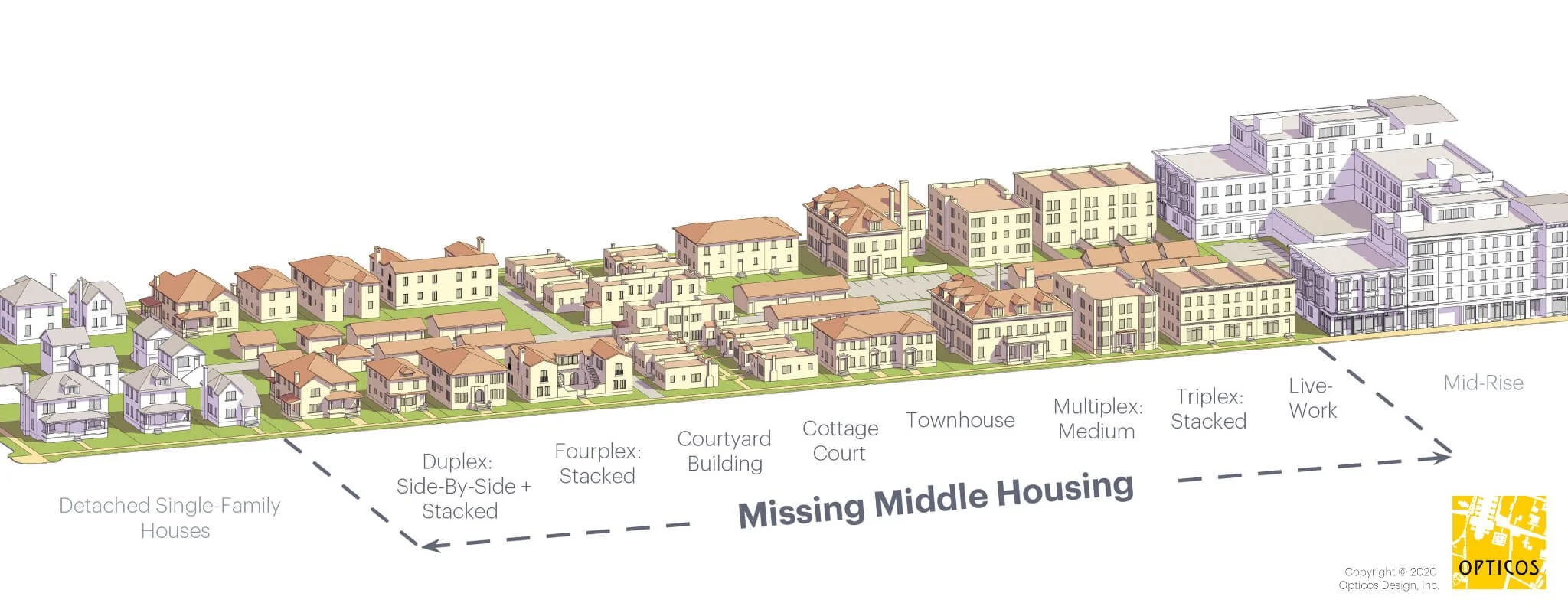
Figure 1: Missing Middle Housing term created by Daniel Parolek/Image © Opticos Design, Inc. For more info visit www.missingmiddlehousing.com
These types of buildings allow for more space (and energy) efficient homes, while still maintaining that smaller form which may be desired in a neighborhood.
Why does this matter right now in Minneapolis?
Minneapolis is undergoing its first major zoning reform since 1999 as part of its 2040 Comprehensive Plan. There is currently a draft version of the zoning code available on their website, and missing middle housing is a top priority according to the city’s comprehensive plan. In late 2019, the city abolished single-family exclusive zoning, allowing 1, 2, and 3 unit dwellings throughout all residential areas. The actual construction of these has been slow in the city for multiple reasons (I go into this more later in this post), but this was a step in the right direction.
In the new zoning code draft, the city is expanding which kinds of missing middle housing can occur by allowing 4+ unit dwellings within Urban Neighborhood 2 and 3 (UN2 and UN3) primary districts. This encompasses (nearly) all of the city between Lowry Avenue and 38th St.
In the new zoning code draft, the city is expanding which kinds of missing middle housing can occur by allowing 4+ unit dwellings within Urban Neighborhood 2 and 3 (UN2 and UN3) primary districts. This encompasses (nearly) all of the city between Lowry Avenue and 38th St. While UN2 and UN3 make up a huge chunk of the city, most kinds of missing middle housing will still remain illegal in UN1 zoning, with 4+ unit dwellings being prohibited.
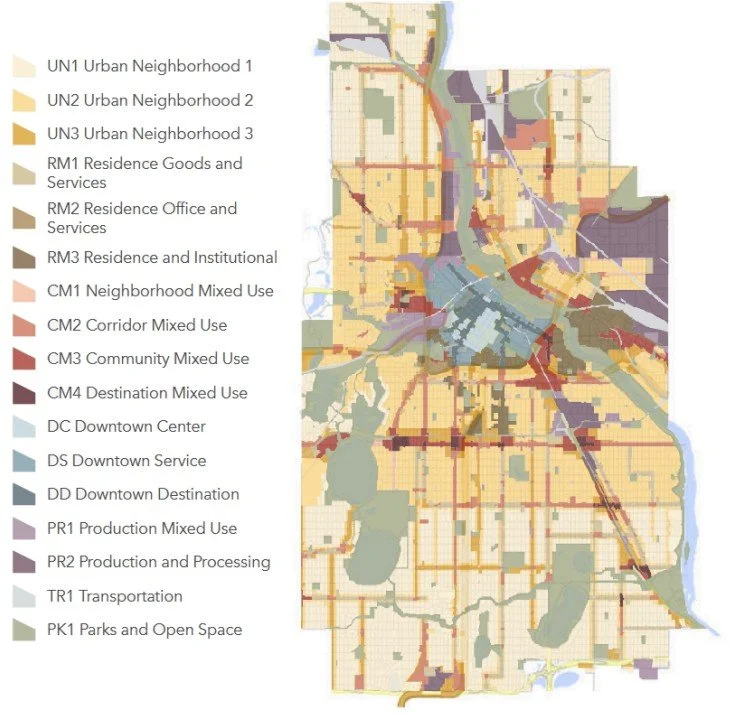
Figure 2: Proposed New Primary Zoning Districts
Wait, didn’t Minneapolis legalized duplexes and triplexes everywhere?!?
As you may know, Minneapolis legalized duplexes and triplexes on all residential lots in the city back in November of 2019. This (and allowing missing middle housing in general) is a part of implementing the Minneapolis 2040 Comprehensive Plan. Unless you live near the University of Minnesota or another high-intensity area of the city, chances are that you haven’t seen too many duplexes and triplexes popping up.
Interior 1 and 2 Built Form Regulations hold back Missing Middle Housing
Built form regulations are to blame because they don’t incentivize building duplexes or triplexes over single family homes. The built form regulations determine how large a building can be on any parcel in the city. Most of the city is zoned as “Interior 1” or “Interior 2” as you can see in the maps below. These are the areas where you are unlikely to see new duplexes or triplexes due to the current built form regulations.
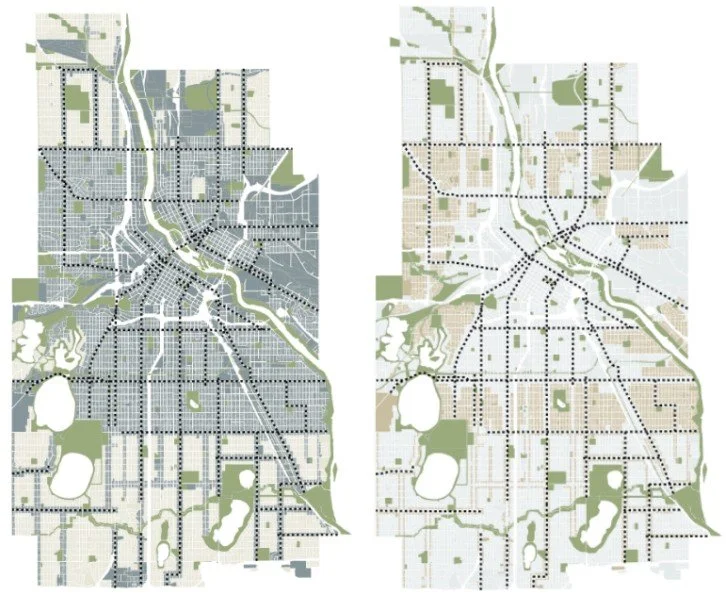
Figure 3: Interior 1 (left map, in cream color) and Interior 2 (right map, in tan) Built Form Overlay districts.
What do we have?
These Interior 1 and 2 parcels have no incentive to build a duplex or triplex over a single-family home because the allowed Floor Area Ratio (FAR) for a 1, 2, and 3 unit dwelling is the same (0.5). This means that if you have a 5,000 square foot parcel of land (typical lot size in Minneapolis), you could build a 2,500 square foot building on that parcel regardless of if it’s a single family home, duplex, or triplex.

Figure 4: (Left) Floor Area Ratio allowance for residential buildings in Interior 1, 2, and 3 from the built form regulations. (Right) 5,000 sqft lot building size allowed in the three Interior districts.
Building a 2500 square foot triplex comes out to about 830 sqft per unit. It is pretty easy to see why a developer wouldn’t be interested in building a triplex with only 830 sqft per unit, because that is only a single-bedroom unit. It’s easier to build and sell a 2500 sqft single-family home.
What do we need?
Interior 3 built form overlay districts are a perfect example of policy that incentivizes development of missing middle housing. You can see above in Figure 4 that they (BFI3) have an increasing FAR allowance for dwellings with more units. This means that a triplex on a 5,000 sqft lot in Interior 3 can have 3,500 sqft of floor area. A 3,500 sqft triplex comes out to a much more comfortable 1,165 sqft per unit, a good sized 2 bedroom unit. I encourage the city to apply this strategy across all Interior districts such as below in Figure 5.

Figure 5: (Left) Example of better FAR allowances which would encourage builders to make more missing middle housing. (Right) Example of 5,000 sqft lot builing sizes. Notice the more reasonable per-unit sizes that are more fitting for families.
What about the other kinds of Missing Middle housing?
In the majority of Minneapolis right now, these other kinds of missing middle housing are illegal because the city doesn’t allow 4+ unit dwellings in R1, R1A, R2, or R2B districts. This will change with the new primary zoning districts, allowing larger lots to have 4+ unit dwellings. This will legalize these different forms of middle housing (courtyard building, quadplexes, multiplexes, etc) on any parcel zoned UN2 or greater. These kinds of buildings will still be strictly illegal in UN1 districts, which will continue to be limited to 3 unit dwellings.
What are some of the benefits of Missing Middle Housing?
These types of housing allow a higher density of people which comes with many benefits including (but not limited to) transit viability, neighborhood walk-ability, and more energy efficient housing (less exterior surfaces when you share walls with others).
These buildings types also have a positive financial impact on their city. These properties are more valuable than single family and generate more property tax. It also keeps the city’s population growth closer to the core, reducing the need for road maintenance and upkeep of our highways leading to sprawling suburbs. Strong Towns often talks about the economic impact of middle (or incremental) housing and walk-able cities and has even written an article about Minneapolis and its mass-legalization of (some kinds) missing middle housing (duplexes and triplexes).
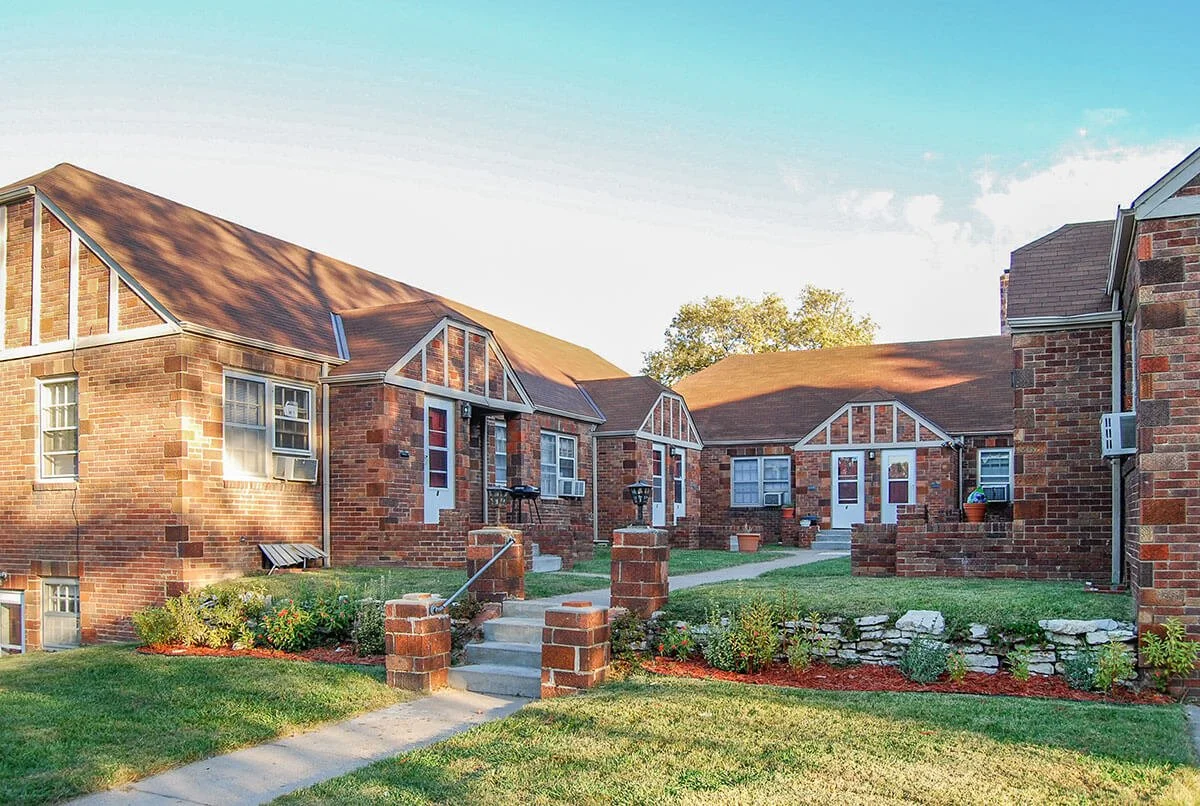
Figure 6: Courtyard building – a type of Missing Middle Housing. Missing Middle Housing term created by Daniel Parolek/Image © Opticos Design, Inc. For more info visit www.missingmiddlehousing.com
What can you do to get more Missing Middle Housing in your neighborhood?
Fill out the city’s survey using our guide and/or tell your council member (or CPED) you want to allow 4+ unit dwellings in UN1 primary districts, and support a comprehensive plan amendment to do so!
Tell your council member and CPED you support increasing FAR allowances for duplexes, triplexes, and 4+ unit dwellings to incentivize Missing Middle Housing.
Volunteer with us or just reach out to us! We have policy experts who can answer all your zoning code questions and help you navigate this complicated topic.
This post was authored by Zachary Wajda (he/him). Zach lives in a duplex in Northeast Park, Minneapolis and rides the 10 bus route on Central Avenue every day! He is open to answering any zoning code questions or helping people learn why its important to have middle housing! Reach out via email (wajdazachary@gmail.com) or twitter (wajda06).
