Zoning codes are often discussed in terms of what types of housing or businesses are allowed in a neighborhood: Can a lot be used for a single-family home, a retail store, or an apartment building? But zoning regulations do far more than regulate land use; they also regulate exactly how land is developed.
Rules known as “bulk controls” govern the size, shape, and placement of buildings. They determine how tall a structure can be, how far it must sit from property lines, and how much of a lot it may cover. These standards shape the physical form of our neighborhoods and influence what can actually fit on a parcel of land.
Even when a particular use is permitted, bulk controls often determine whether a specific building is feasible in practice.
What Do Bulk Controls Regulate?
Bulk controls take many forms, but they all regulate the physical dimensions of development. Some of the most common of these include:
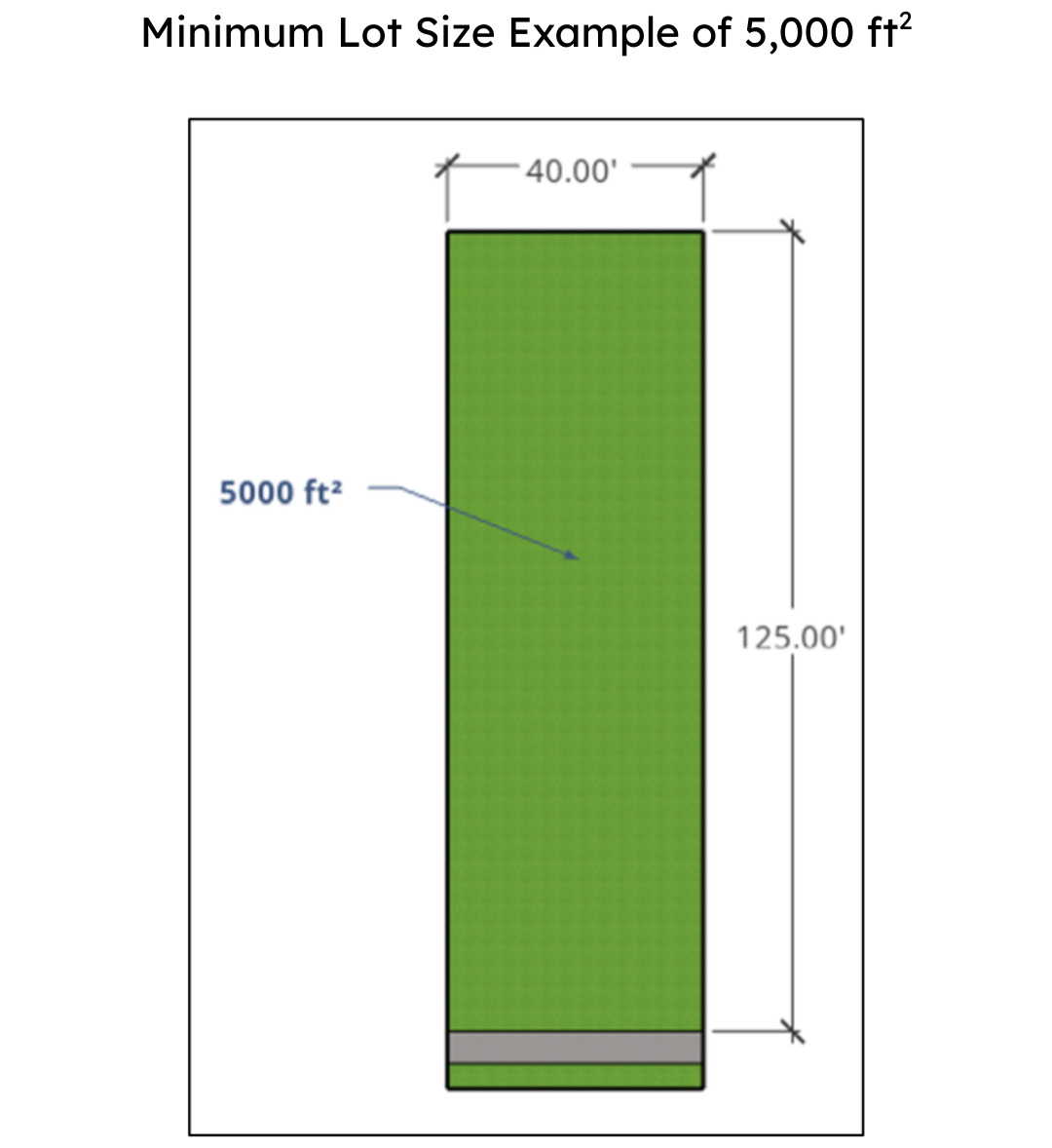
Minimum Lot Size and Lot Width
These rules require a lot to contain a minimum amount of land and often require a minimum width before a home can be built. Larger minimums reduce how many homes can fit within a neighborhood.
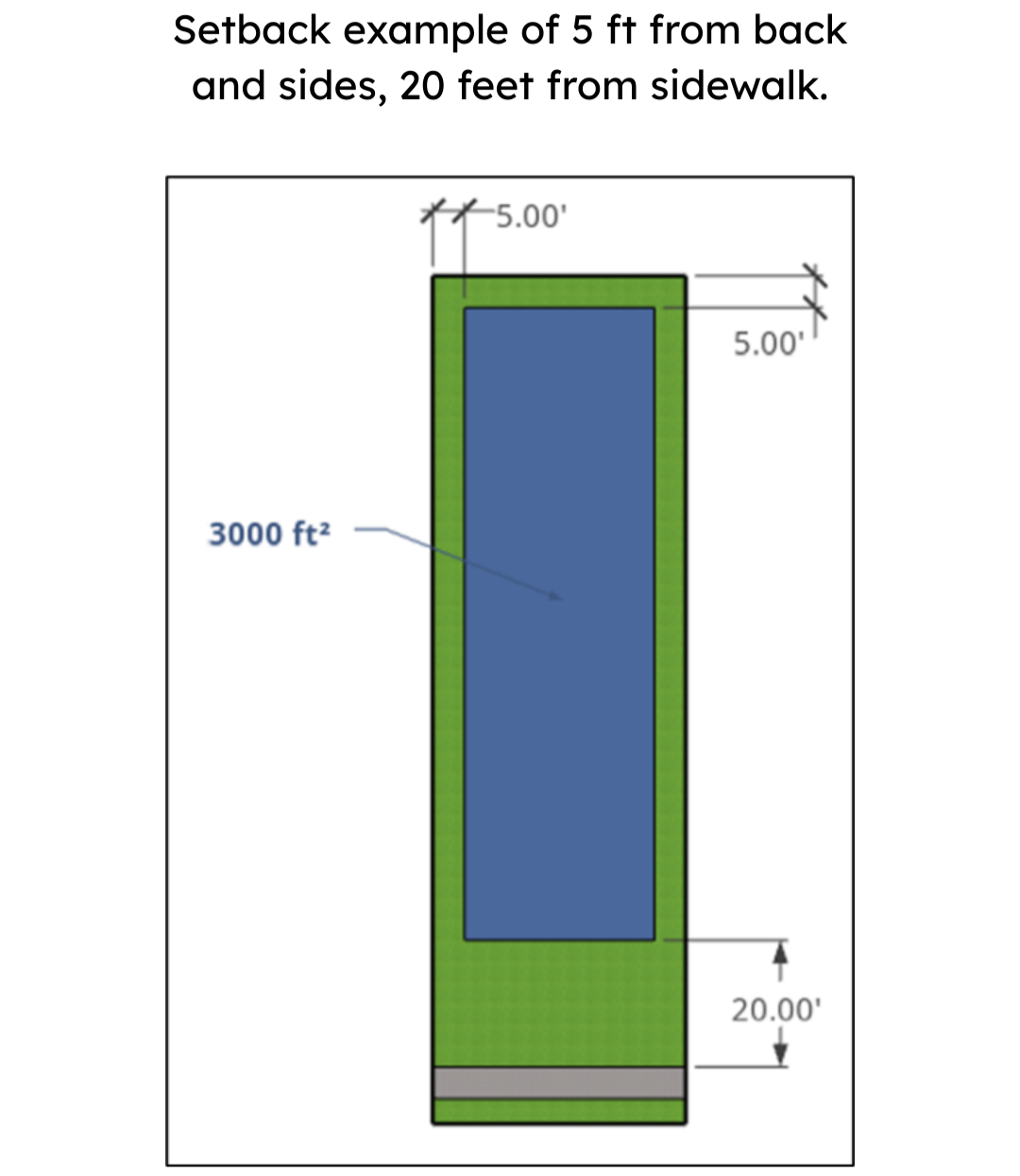
Setbacks
Setback requirements mandate that buildings be placed a minimum distance from property lines or other structures. These standards typically apply to the front (toward the street), sides, and rear of a property. Setbacks reduce the portion of a lot where construction is allowed.
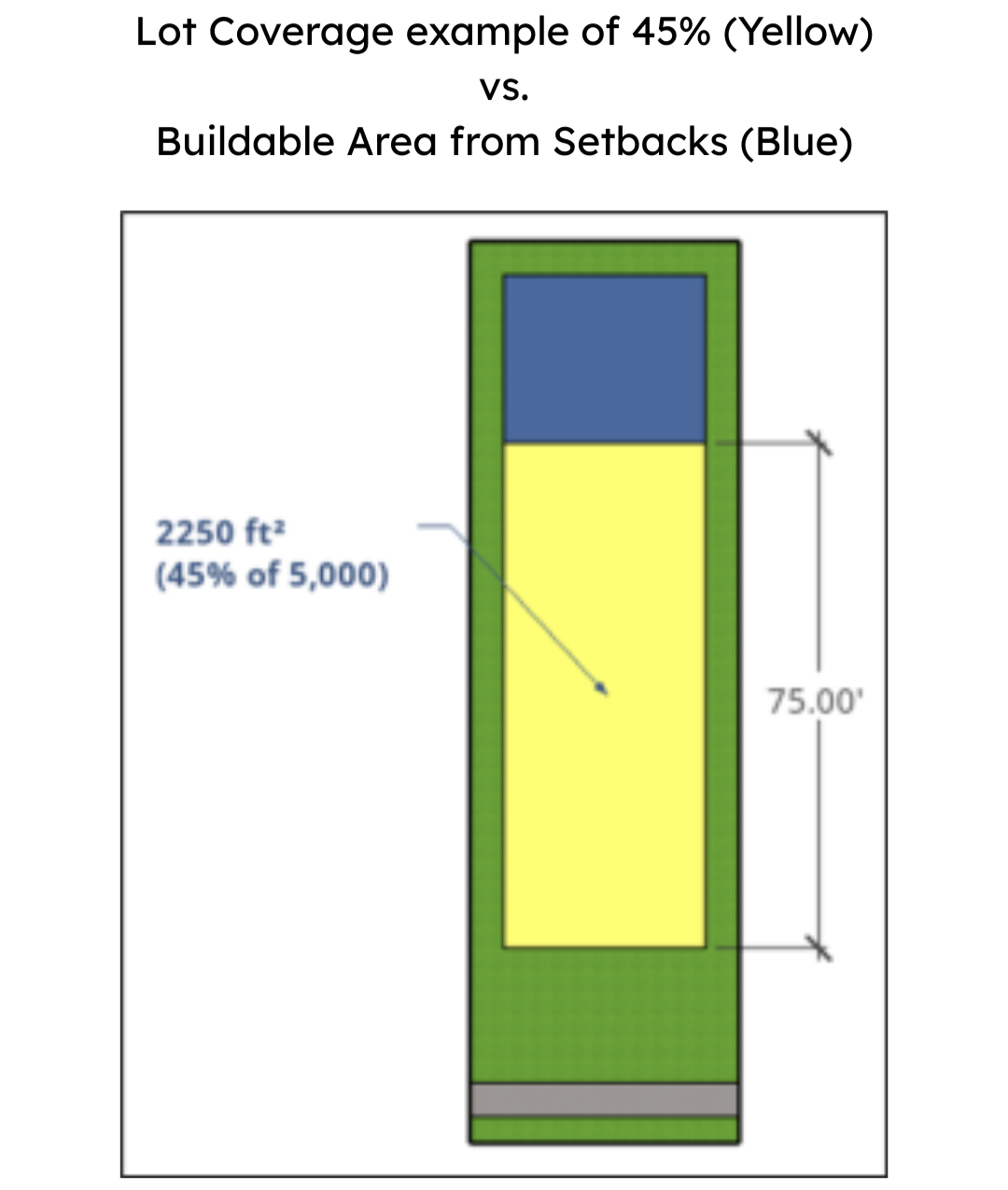
Impervious Surface and Lot Coverage Limits; Floor-Area Ratios (FAR)
These standards cap how much of a lot can be covered by buildings, driveways, or other hard surfaces. FAR specifically limits the total square footage of a building relative to the size of the lot.
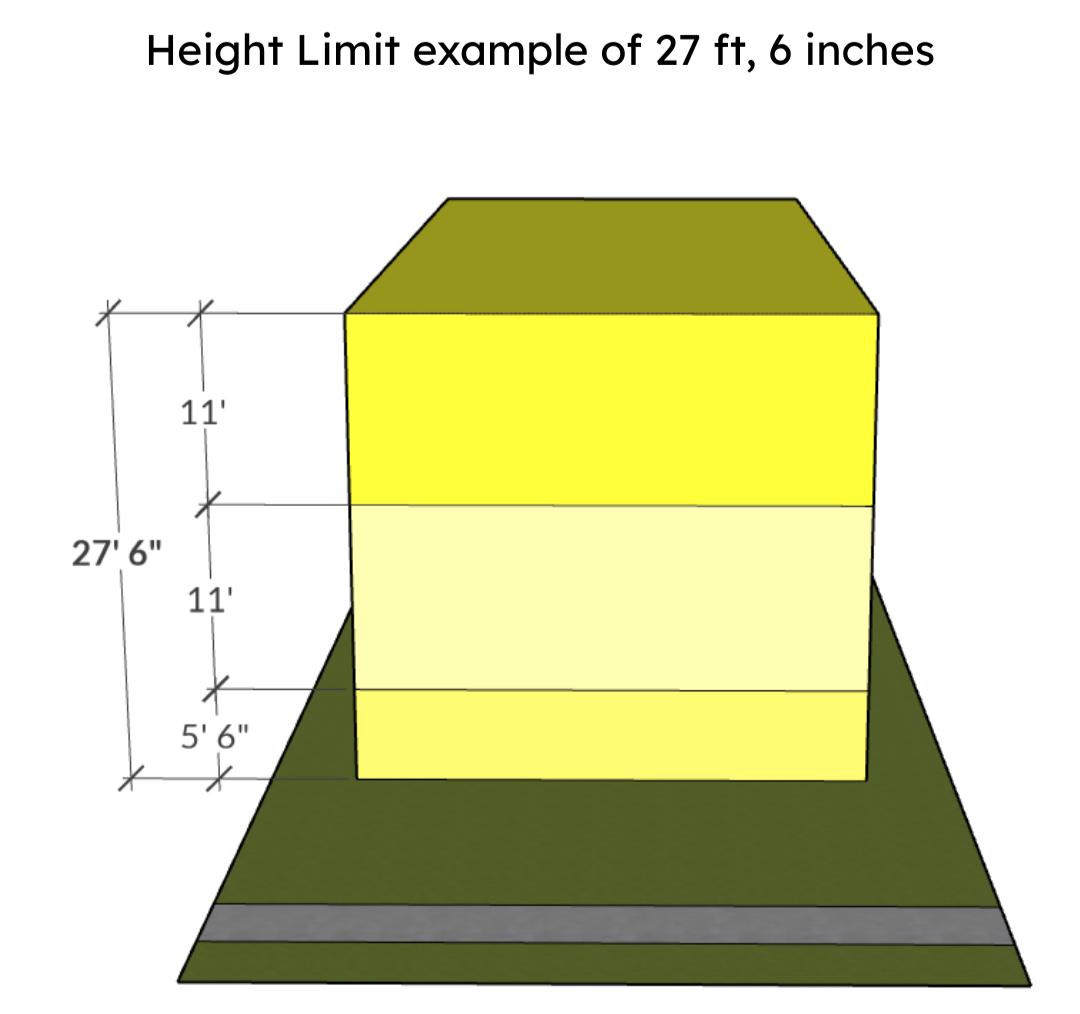
Height Limits
Height limits cap how tall a building can be. They are usually measured in feet, number of stories, or a combination of both.

Density Limits (Dwelling Units Per Acre) and Minimum Unit Sizes
Some zoning codes limit how many homes can be built on a given amount of land, regardless of lot size. Others require each dwelling unit to meet a minimum square footage. Both can affect how many homes fit on given amount of land.
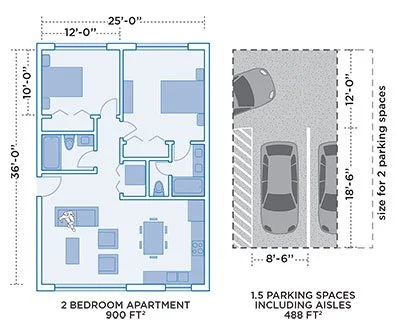
Parking Minimums
Parking requirements mandate that a certain number of off-street parking spaces be provided per home.
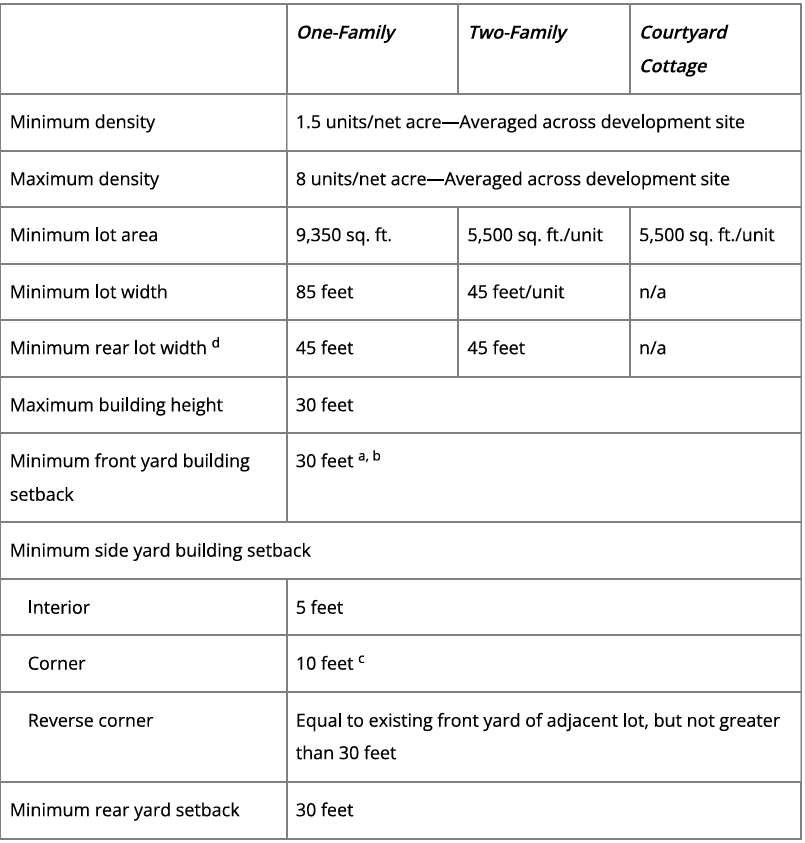
Chart of bulk controls for different home types.
How Are Bulk Controls Implemented?
Each of these rules regulates a different aspect of development. Together, they define the building envelope: the three-dimensional space that a structure must fit.
When a city receives a development proposal, staff review the plans for compliance with these standards. If a proposal meets all applicable bulk requirements, it may proceed through to the building-permit approval process. If it does not, the applicant must revise the design to comply or, in some cases, seek a special exception from the Planning Commission or City Council.
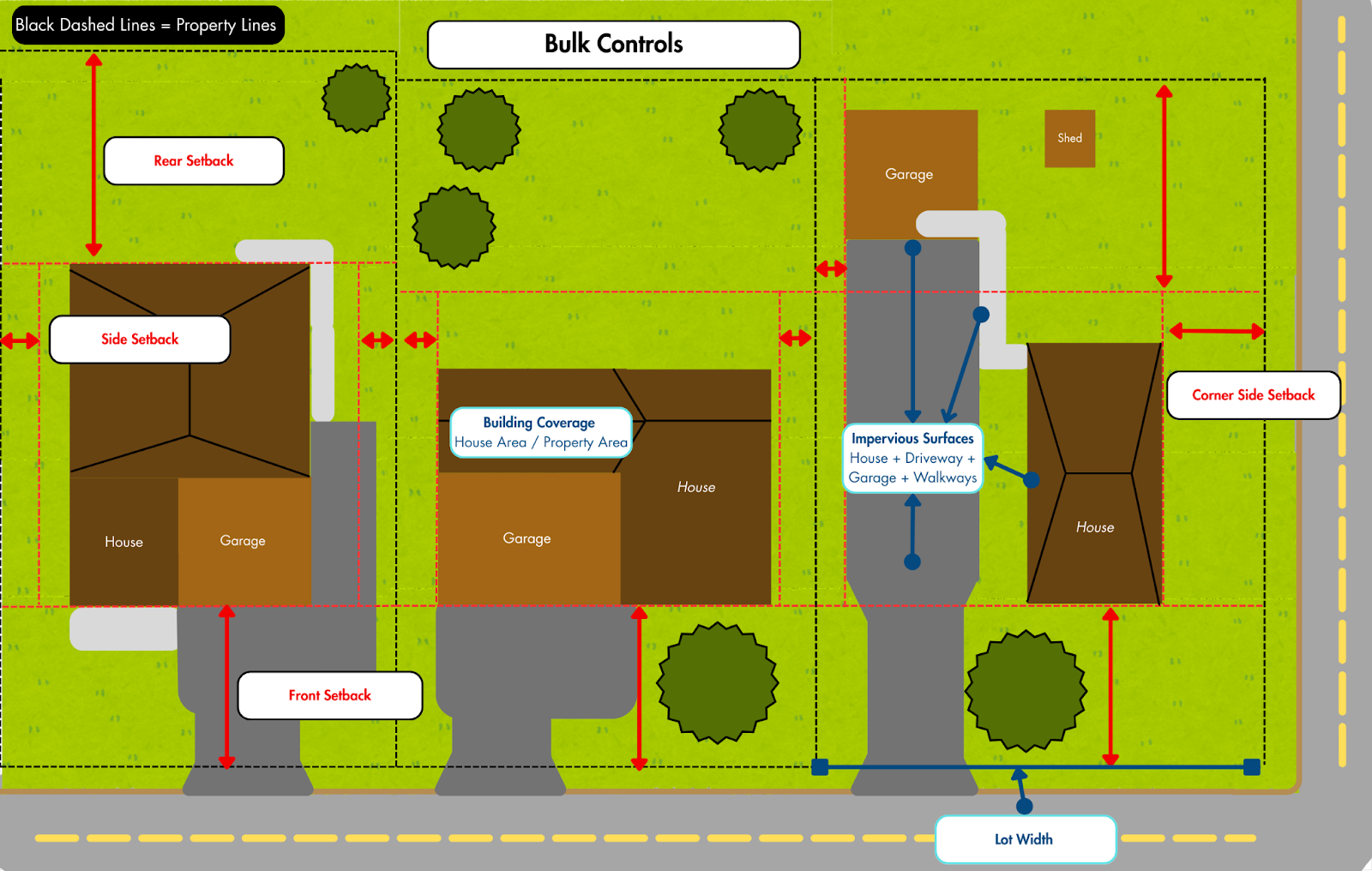
Graphic showing various bulk control examples within a city block.
Because each municipality adopts its own set of bulk controls, often with different requirements for each zoning district, what can be built on two similarly sized and positioned lots may vary significantly from one city to the next. In some cases, even lots within the same city may be subject to very different rules depending on their zoning designation.
Why Do Cities Have Bulk Controls?
The intent behind bulk-control standards is not inherently arbitrary. They are tools cities use to shape development in ways that reflect local priorities and conditions.
Height limits and setbacks are often intended to maintain neighborhood scale, preserve light and air, and create consistent building patterns along a street. Impervious-surface limits are commonly used to manage stormwater runoff and reduce flood risk without requiring property owners to pay for costly stormwater studies. Parking requirements are frequently adopted to prevent spillover parking on public streets.
These standards create predictable and consistent outcomes. Land-use laws in the United States must be structured to apply broadly rather than favoring or disadvantaging specific properties. By establishing clear standards that apply to all properties within the same zoning district, cities and property owners alike can consult the zoning code to understand what types of buildings are likely to be constructed nearby.
At the same time, the selection of the specific setback distance, height limits, and impervious surface caps reflects policy choices. Cities must decide how much flexibility to allow, how much land should accompany each home, how tall buildings may be, and how much space must remain open. Communities approach and answer these questions differently, which is why bulk standards can vary dramatically across municipalities and zoning districts.
When Bulk Controls Fail
As discussed previously in N4MN’s blog on minimum lot sizes, many of the specific figures used for bulk controls, such as the side-yard setback distance or the minimum lot square footage, were adopted decades ago. In many cases, the original rationale for the specific numbers for these standards is not well documented, even though the standards remain in place today. Over time, bulk controls have become misaligned with current community priorities and housing needs.
These standards have also aggregated on top of one another. New standards are added, older ones remain, and the combined effect can be more restrictive than any single rule suggests.
For example, a city may decide it wants to allow more housing and remove a dwelling-units-per-acre limit. On paper, that reform increases the number of homes that could be built on a site. A housing developer’s first consideration might be to add these newly allowed units by expanding a building’s footprint, but if lot coverage or impervious surface limits are already near their maximum, there may be little or no room to build outward. The next option might be to build upward, but height limits or floor-area ratio caps can restrict additional stories or square footage.
In this scenario, the density restriction has been removed, but other bulk controls still prevent additional homes from fitting on the lot. Each standard may serve a purpose on its own, yet together they determine what is feasible. When bulk controls are not periodically evaluated as a whole, they can constrain development in ways that were not originally intended.
Reforming Use of Bulk Controls
Because bulk controls heavily shape what can realistically be built when aggregated, housing reform requires more than simply listing additional uses as permitted or making a minor tweak to one standard.
To address Minnesota’s housing shortage and support the construction of more homes, reforms must ensure greater consistency between what zoning codes allow in theory and what can be built in practice. The Starter Homes Act does just that.
The proposed bill would require cities of certain sizes to allow mixed housing in portions of areas currently zoned for single-family homes and to permit multifamily housing in portions of commercial districts. Moreover, while cities could continue to regulate height, setbacks, and other dimensional standards, under the Starter Homes Act, those standards could be structured in a way that makes housing both permitted AND possible to build, rather than the status quo, where certain housing is permitted but physically impossible to build due to overly restrictive bulk controls. The bill further requires municipalities to publicly demonstrate how their zoning codes comply with these requirements.
Aligning bulk controls with housing policy helps ensure that permitted housing types can actually be constructed, making zoning clearer, more predictable, and more responsive to Minnesota’s housing needs.